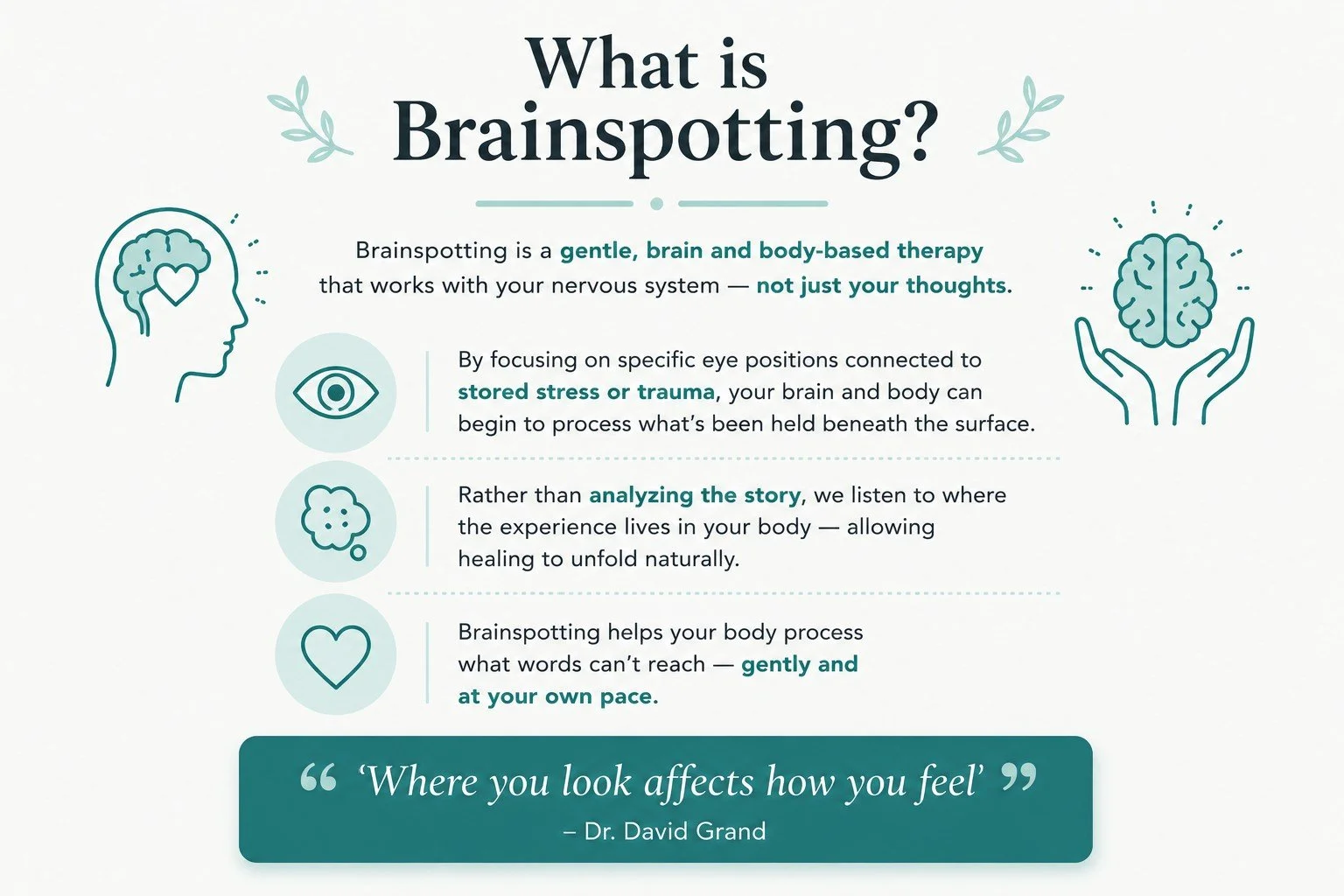
“Where you look affects how you feel.”
David Grand, Founder of Brainspotting
What is Brainspotting?
Brainspotting is a gentle, deeply effective therapy that helps your body and nervous system release what has been held for far too long.
Instead of talking about what happened, we work with where it lives in your body — allowing healing to unfold from the inside out.
By locating specific “brainspots” — eye positions connected to activation in the nervous system — Brainspotting helps us access the emotional and physiological root of anxiety, trauma, stress, grief, and patterns of self-protection.
This approach honors your nervous system’s innate capacity to reorganize and heal, at a pace that feels safe and grounded. It is both scientific and spiritual — rooted in brain-based healing, while also making space for meaning, intuition, and inner knowing.
→ Want to understand how it works?
Watch Dr. David Grand, the founder of Brainspotting, explain it here. in this video.
“How you feel affects where you look.”
Jaegil Lee, Phd
If you’ve felt stuck, overwhelmed, or disconnected from yourself, Brainspotting can help you reconnect with clarity, steadiness, and freedom.
-
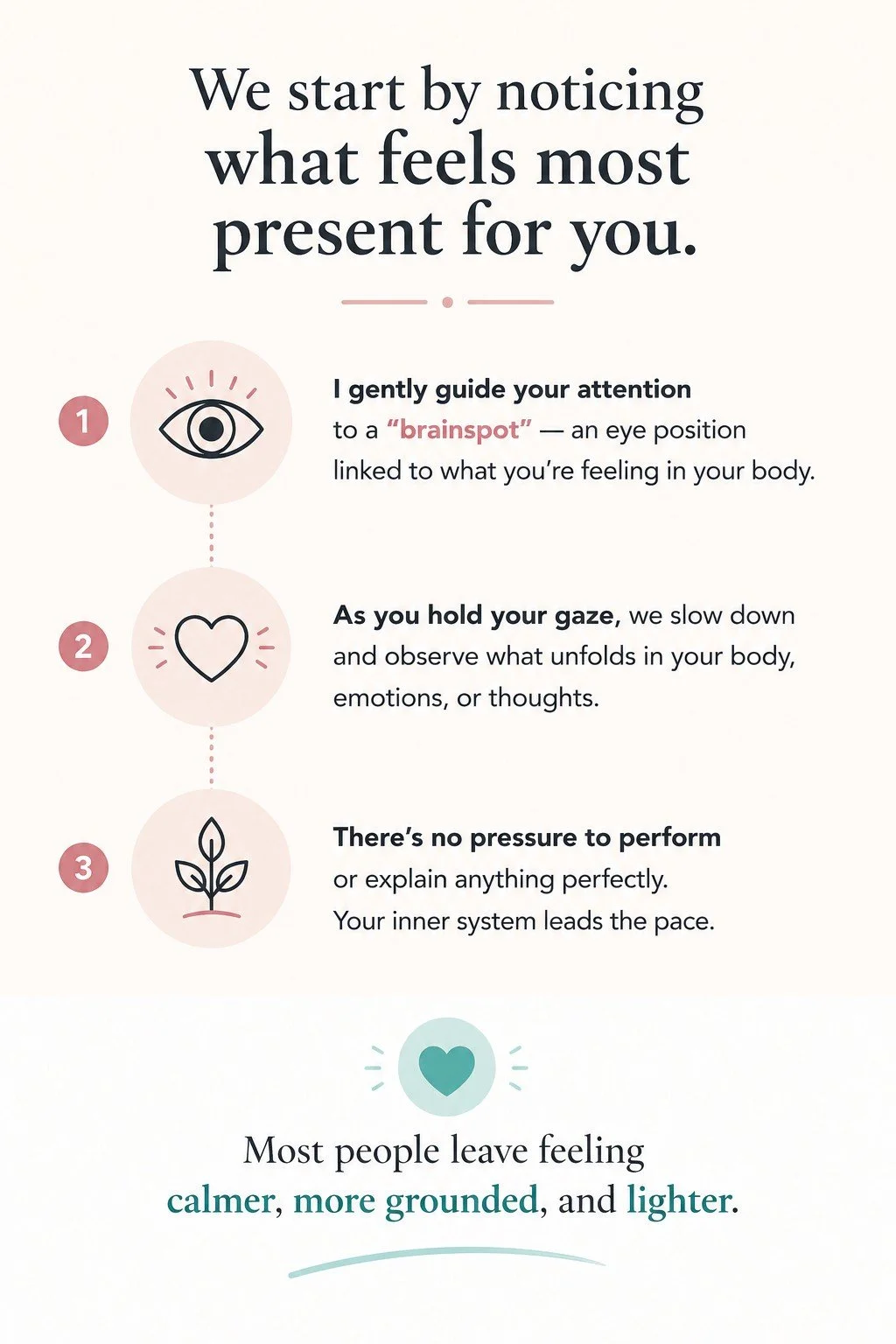
In a Brainspotting session, we start by clarifying what feels most troubling for you. From there, I guide your focus to a brainspot connected to the emotions or memories tied to that experience. As you hold your gaze, we slow down and gently notice the physical sensations, thoughts, or feelings that arise—with curiosity and compassion.
This is the essence of neuroexperiencing: giving your nervous system permission to feel and process without judgment. It is also a deeply spiritual practice—an invitation to be present with your inner world and allow your body’s wisdom to guide you toward release and renewal.
I also hold in mind how your intersectional identity and lived experiences shape the way you carry stress and trauma. This ensures that your whole self is honored in the process.
Many clients describe feeling lighter, calmer, and more focused after a session, often with less physical tension and a renewed sense of clarity.
-
Unlike traditional talk therapy, Brainspotting works directly with your body and subconscious mind, not just your conscious thoughts. It helps you access trauma and emotions stored in your nervous system—even those that may be hard to put into words.
When combined with the neuroexperiential model, Brainspotting creates a safe space for your body and brain to do what they naturally know how to do: heal. Because I bring an intersectional, spiritual, and humanist perspective, we work not only with your personal history but also with the cultural, systemic, and existential layers that shape your healing journey.
This embodied, mind-body therapy encourages gentle release, self-acceptance, and lasting change—making it especially effective if you’ve felt overwhelmed, stuck, or unable to fully thrive.
-
Brainspotting can help you if you’re ready to:
Release emotional trauma, cultural stress, or life challenges that keep you feeling stuck
Ease physical tension and body-based symptoms connected to past experiences
Feel more grounded, present, and connected to your body, emotions, and spirit
Reduce overwhelming anxiety, perfectionism, or chronic stress
Process memories, images, or feelings that feel hard to put into words
Reclaim your sense of wholeness and step into lasting change
Rooted in the neuroexperiential model, Brainspotting invites you to notice your body and mind with gentle awareness, creating space for both emotional release and nervous system regulation. This safe, evidence-based, and spiritually attuned therapy honors your full, intersectional identity and offers a powerful path to resilience, clarity, and growth—helping you thrive personally, relationally, and professionally.